
My XR journey
How early student projects turned into international VR productions for Volkswagen — and what trade-show reality teaches about immersion that no lab demo shows.

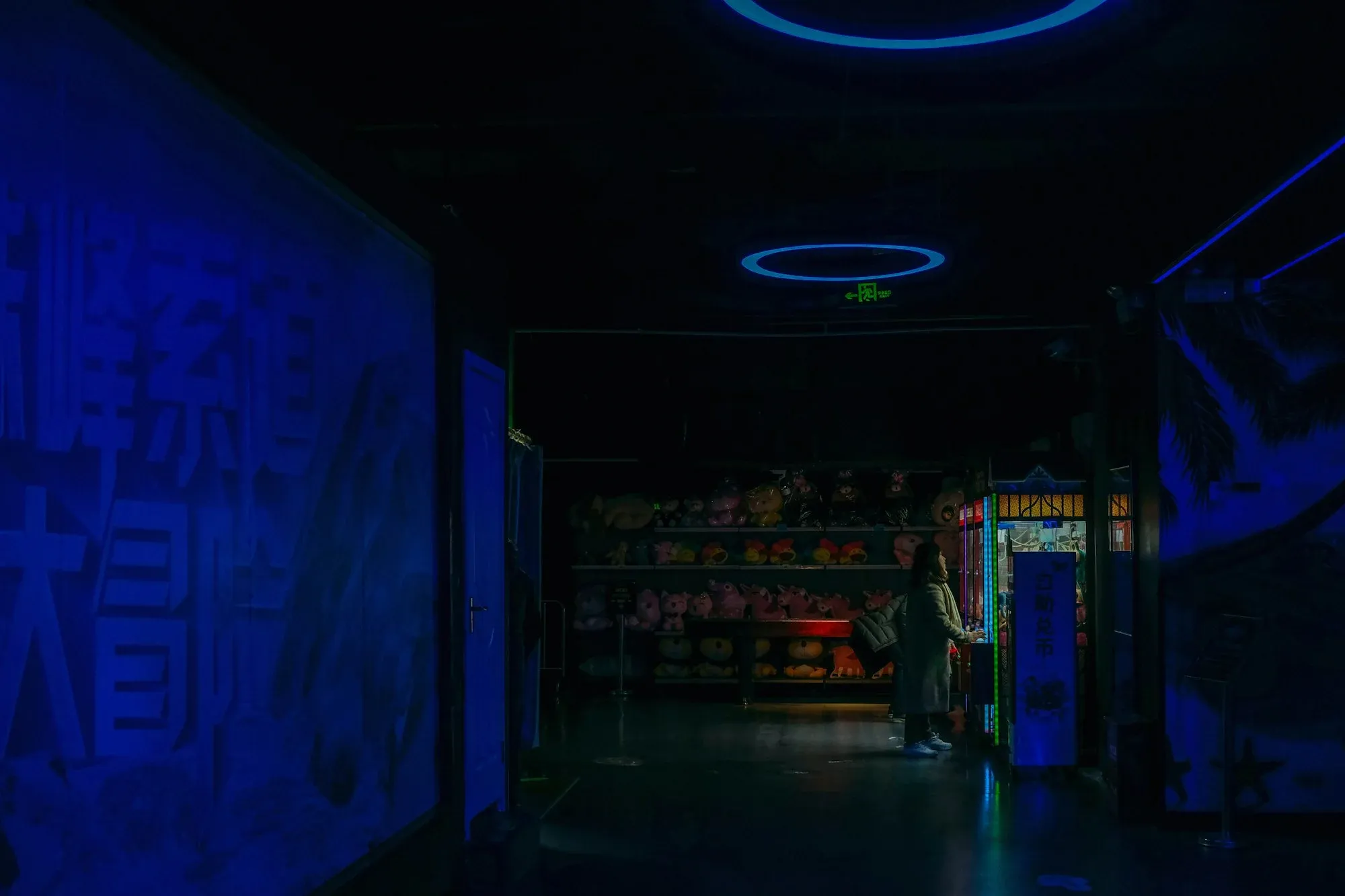
My first freelance jobs took me around the world — and they revolved around one of the automotive industry's biggest promises: Volkswagen's vision of selling electric from 2025. Before those vehicles even hit the road, people were already meant to experience them — in virtual reality, on show floors from Guangzhou to Las Vegas. My job in all of this: make that future run when there's no second take in front of an audience.
This post tells the path that shaped my experience horizon — from a student building a hoverboard controller out of foam and an Arduino, to operating other people's software, to developing my own. From the first HTC Vive to founding my own company: here are the real-world reference points to those memories.
It all started with the Oculus DK1
Yes, VR existed in the 70s, but it was so limited that it was immediately abandoned. Simply because there was not enough CPU and GPU power on the chip. But in 2015 it started to take off. For me, this world only really came to life with the VIVE. When I think of the first HTC Vive, it's anything but super smooth. The head-mounted display (HMD) is pretty heavy. But it's such an all-rounder and amazingly stable in all kinds of situations.
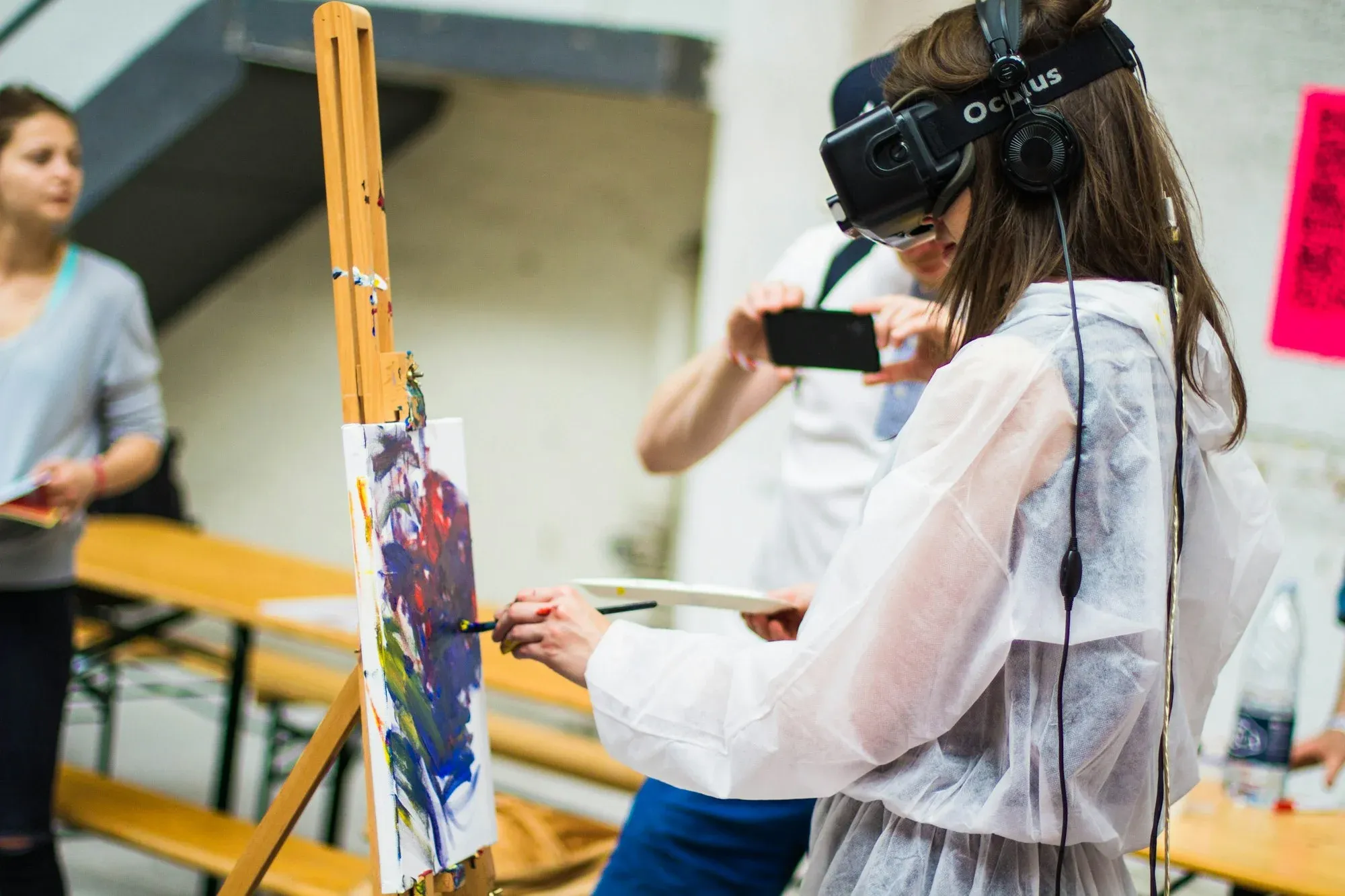
Oculus (DK2) with Leap Motion for hand tracking
First, however, the first Oculus (DK1) hit the market. Basically, a funnel that led into a box with one display that produced a colored image on the nose of the enthusiastic user and, if you were lucky, you could see it with your eyes. The DK-1 disappeared pretty quickly and was soon followed by the DK-2. Now, decades later, it has become a popular collector's item for those who like to reminisce about the early days of virtual reality. The same goes for the first HTC Vive with the Morning Star controllers. But for me, it really started with the VIVE.
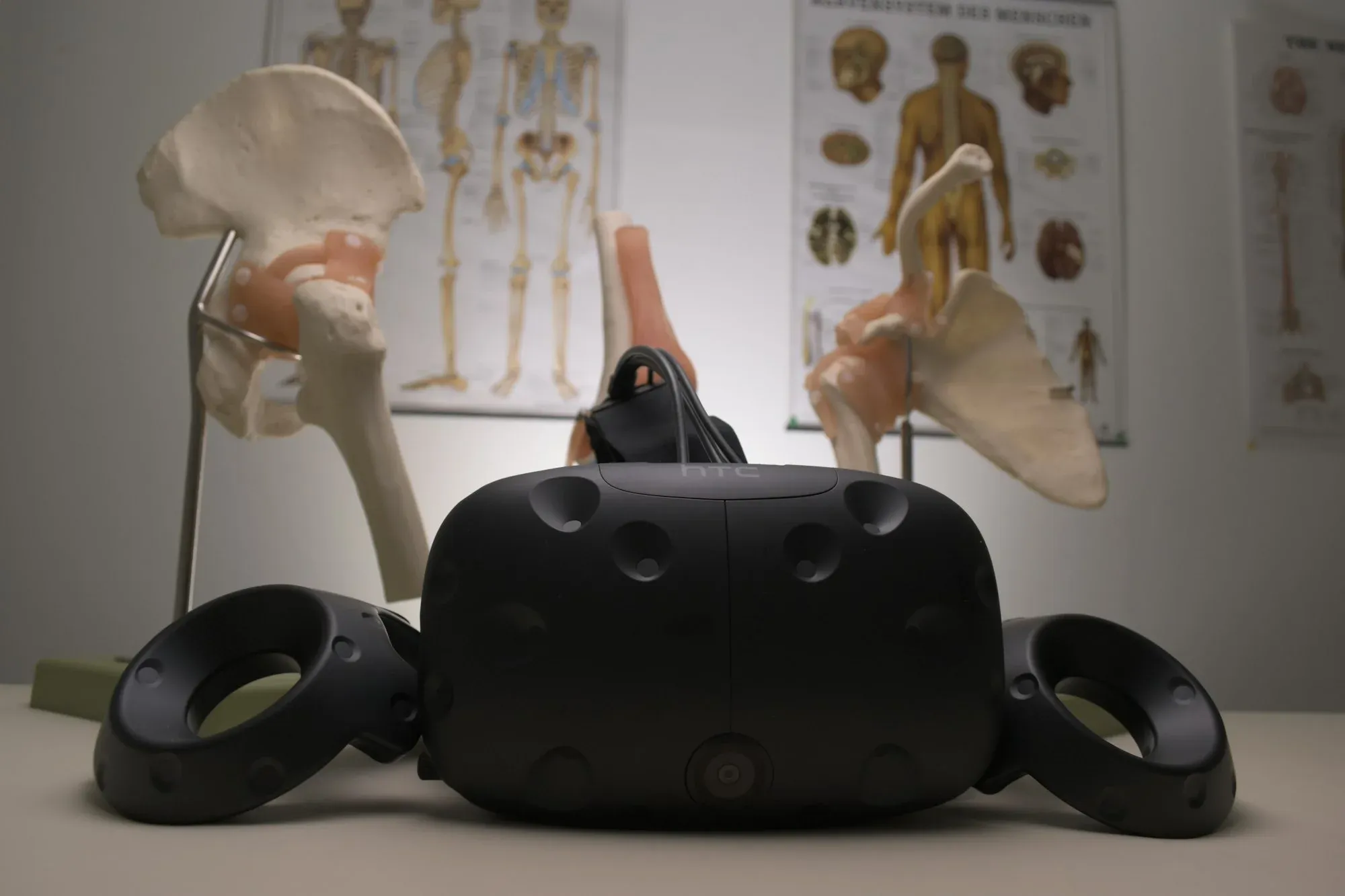
HTC Vive with controllers, detected by Lighthouse (IR) trackers for precise VR
Hoverboards and foam cushions
In Back to the Future, Marty McFly's hoverboard is a fantastic gadget. It can be steered by shifting your weight and pushes the rider off the ground. This was my first game controller in Unity 3D, and it turned out to be a fun but motion-sickness-inducing game. As a student, you have a lot more time to develop content without having to worry about finances. So I was able to build this controller physically — with different layers of foam and a skateboard deck on which an Arduino was placed. This made the virtual world and the controls feel exactly like a hoverboard. Thanks to the gyro sensor, which transmitted the rotation of the virtual controller, the player could really lean in and steer a virtual hoverboard through the oversized Mario world.
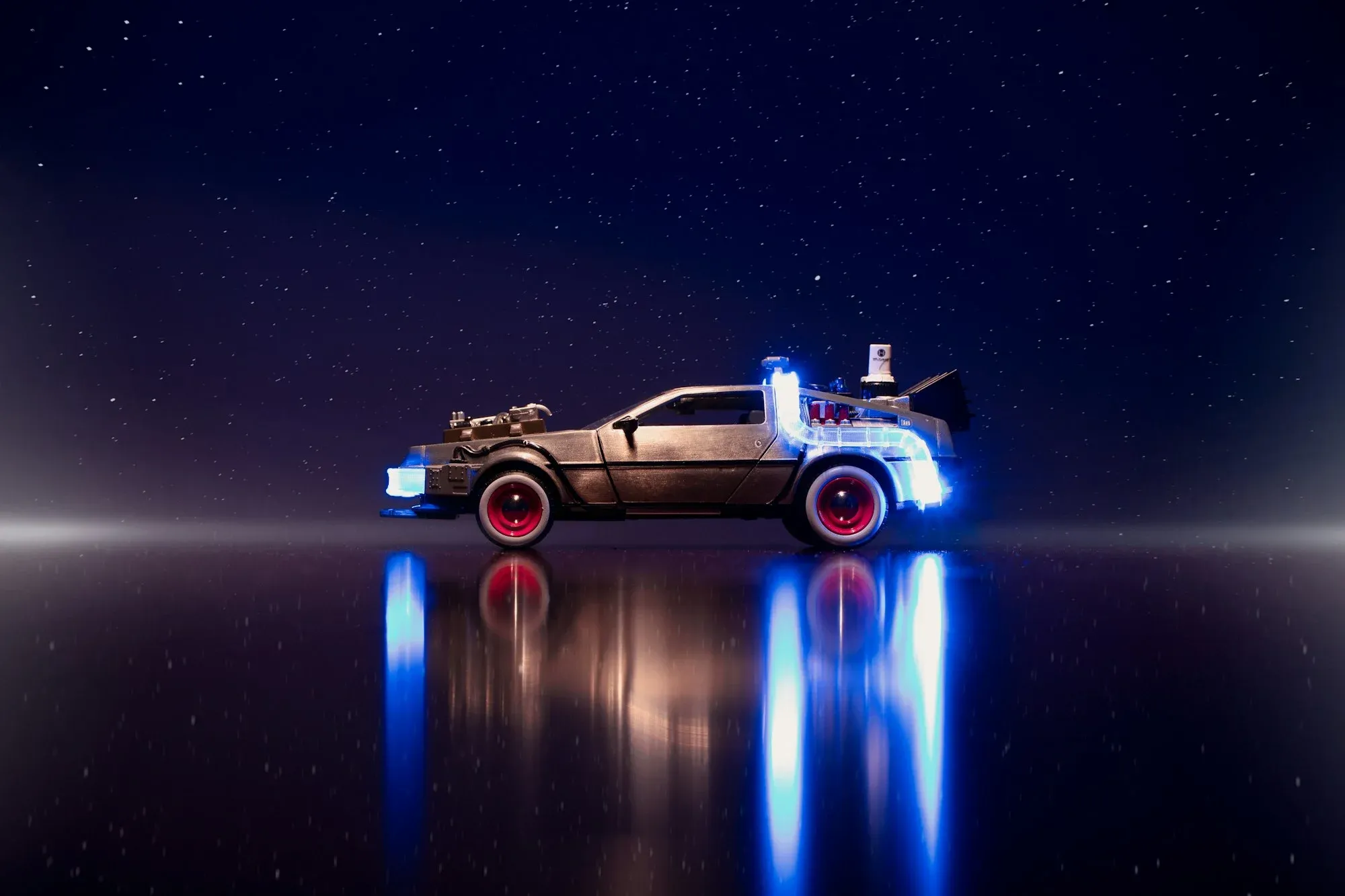
A piece of the future brought back to reality — much more exciting than the two-wheeled hoverboards still sold to children today.
Two more XR projects followed — Memodia and Exofear, the latter of which led to the VIREED contract. In short, Exofear was about the experience of being alone in space. Isolated with scraps of memory that you piece together.
Parallel to the projects at the Design Factory in Hamburg, I had to start my own business to finance my studies and my life in Hamburg. Over the next few years, starting in 2015, I began working for the VR Nerds and, as mentioned, for VIREED. I design virtual content and organize events with VR. Sometimes both at the same time, sometimes one after the other.
With HERE Technologies for VR-Nerds at the Paris Motor Show
HERE Technologies revolutionized navigation with their online geodata service, originally developed for Nokia smartphones. At the Paris Auto Show, they showcased innovative new features in VR. As part of the team at VR-Nerds, my role was to set up and configure the hardware, ensuring seamless software performance. I successfully calibrated and ran the HTC Vive on SCHENKER laptops, despite a tricky setup with short HDMI cables.
The HERE team was absolutely amazing, and after the event we invited everyone with VR Nerds to one of the evenings to try out the latest developments. The shooter "Debugging VR", where you had to shoot at hordes of bugs, was the most popular one in VR. Everyone played until late at night, trying to beat the high score of Philipp, my boss at the time. VR can be used incredibly well in a competitive sense — players and spectators follow the events in the virtual world and get excited together. I think the milestones for the later company development of VR-Nerds were set here with their later arcade title Tower Tag, which is now independently operated by Philipp and his company.
VR in China from Guangzhou to Shanghai
One of my main projects was presenting the new VW ID series to a global audience. I worked on showcasing the ID, ID SUV, and BUZZ at various events in Guangzhou, Shanghai, Las Vegas, and Geneva.
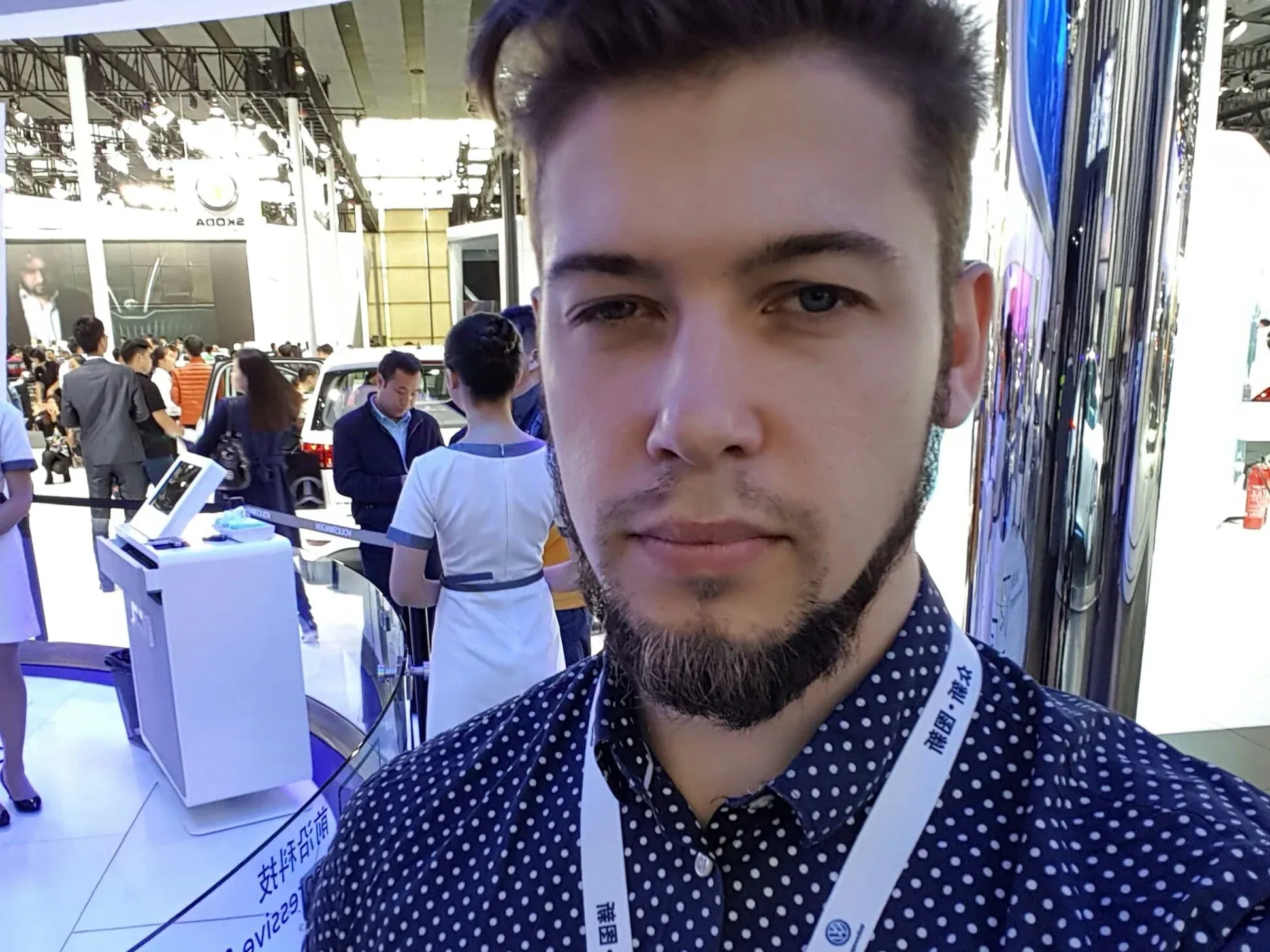
Guangzhou, heat and Virtual Reality
My first real-world challenge with VR was at the Guangzhou auto show, where I pushed the HTC Vive to its limits. Working under intense heat (up to 30°C) for extended periods made it a true test of endurance. Meanwhile, our VW-ID application, developed by INFECTED post-production, proved stable but required significant performance optimization. At some point, this also affected the PC's graphics cards, from which the content was transferred to the HTC VIVE VR headsets via a long HDMI cable. Suddenly the PC went down and nothing worked, so I had to open it up and reconnect the graphics card in a surgical procedure — something of a trick when you add heat, humidity and constant stress together and then realize what the PCI slot on the motherboard can take. On this occasion, I also discovered that the card was not even secured and therefore had a lot of play up and down. Luckily I had two computers at my disposal, both of which were to be used for all further shows after this mission.
The real lesson from Guangzhou: at a trade show there is no second take. If you ship VR in front of an audience, you need redundant hardware — and someone who opens up the machine in an emergency instead of calling support.
Despite the constant uncertainty of whether the setup and the VW Unreal Engine XR application would function, the job went well and I was able to explore the show in search of new media content. From luxury brands to the usual European car manufacturers, there was plenty of virtual reality to be found in the huge event areas. Right next to the Volkswagen booth, you could explore the features of a family car together in an application for up to nine people — less exciting and not really convincing, but well attended in this cultural environment where everything is done together.
Kite gliding at Nissan
One of my standout experiences was the Nissan application, where I used a Kuka production robot combined with Unity to simulate kite gliding. Although the content quality wasn't perfect, the immersive effect was undeniable — especially when coupled with movement and wind effects that generated a thrilling sense of speed. With virtually no safety requirements, the setup was very optimistic.
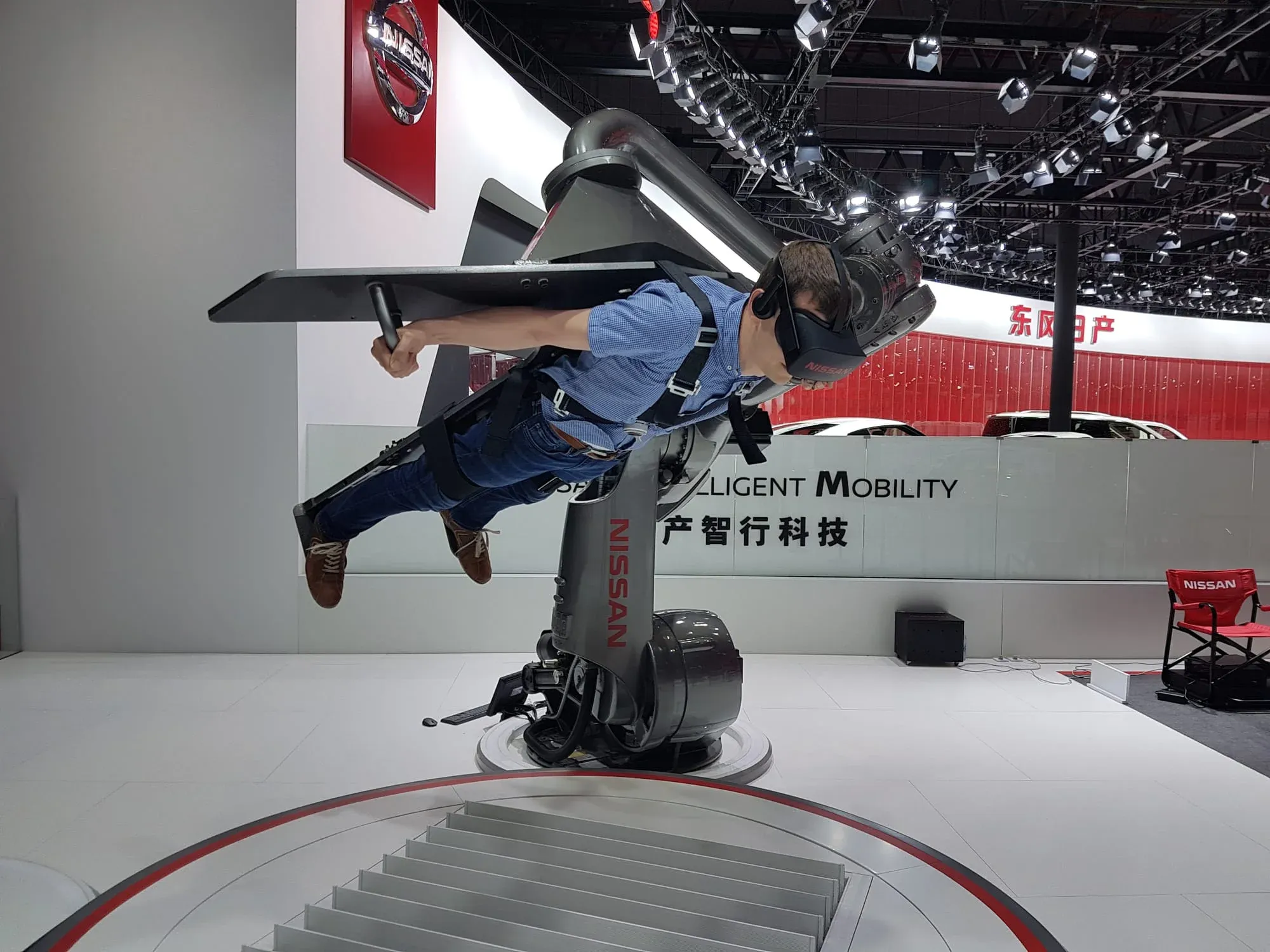
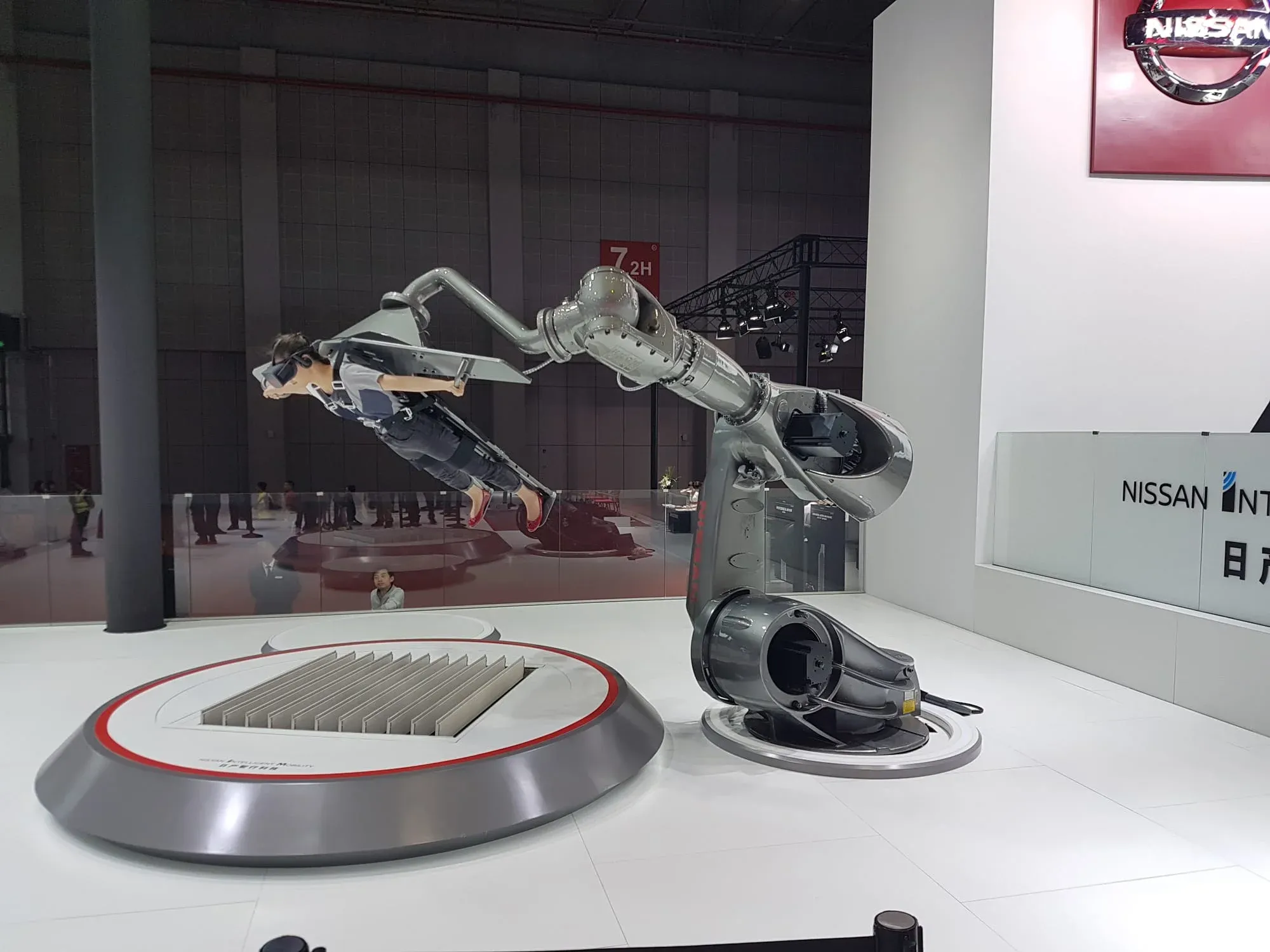
People were strapped to the Kuka production robot with strong Velcro straps, then held above the giant fan and moved up and down. This was the most ambitious setup to date and an absolutely unique experience!
Can VR add to the magic of Las Vegas?
My experience at the Las Vegas CES was a true tech wonderland. I witnessed cutting-edge trends like curved LED screens and electric cars on display. Meanwhile, VW showcased their BUZZ alongside the ID, amidst an atmosphere that felt more like Hollywood than genuine innovation — a world of pretenses rather than realities. Somehow, everything is trimmed for marketing and my event support team took every opportunity to label everything as amazing.

On my way to work from my hotel, I would have this scenario every morning and evening.
There is a casino under every hotel, and if you want to eat something in the evening you can watch seniors gambling — which I didn't find so amazing. So despite Vegas, this event was rather unglamorous.
Why David Copperfield was less than enthusiastic about VR
What definitely made the Vegas visit stand out, however, were the recurring visits from celebrities. From Tim Cook to David Copperfield, VW brought them all to the show floor.
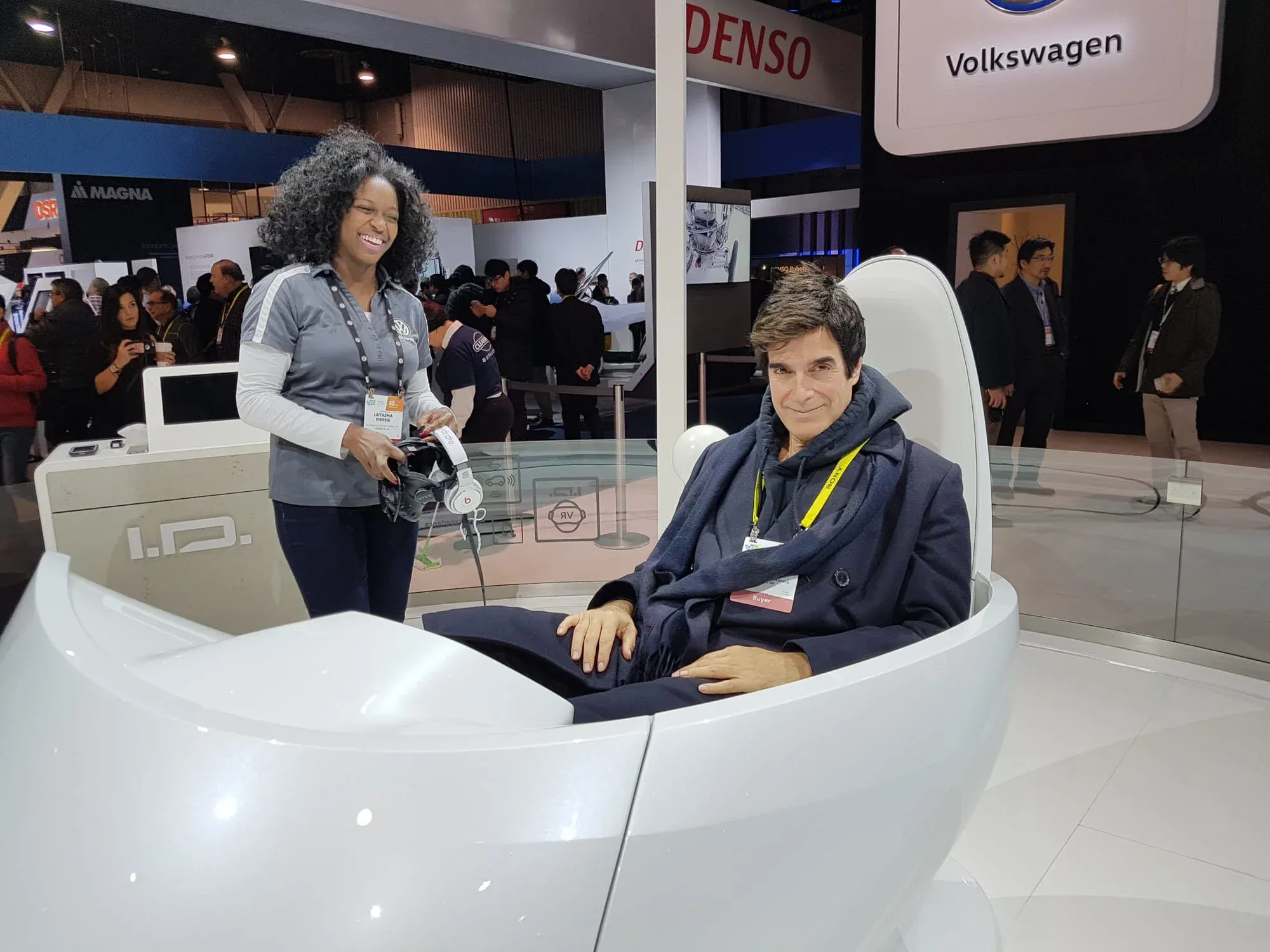
Mr Copperfield even got to take a virtual test drive in the ID. Putting an HTC Vive on the great magician and watching him move around the car with hand tracking was really awesome. To his credit, he didn't stop at any point. However, his face was completely expressionless afterwards. For someone who works with so many exciting technologies to conjure magic, VR must feel like a small piece for just one person. It remains a milestone in my career to this day!
A rooftop party with Upload VR
After Steve Aoki invited me to his party (he was obviously a bit more enthusiastic about our VR application), of course I wanted to attend at least one rooftop party — but I declined in order to be fit in the morning. The Upload VR party, however, I couldn't miss. It was an amazing event, over the rooftops of the city with a huge roof terrace and a roof that could be opened like a box. The interesting aspect was that some companies were invited to show their VR technology, both hardware and software. Among them was the Audi experience, which I was already familiar with. The concept is actually super simple, but uses a very exciting culling shader that paints the edges of the model honey-colored — so you could see inside the car with all its interior in an exciting way if you put your head into the geometry. The teams from Leap Motion and Manus VR were also there, each with their hardware, but so many people wanted to test it that I was only able to talk to the founder of Leap Motion about how we use the device and what is possible with the SDK.
Shanghai, with a European sense of technology
I'm not even sure how I got to Shanghai in the first place. Because this time I wasn't just travelling with software that someone had made for the customer — the VW I.D. Crozz. This time I was directly involved in the development. The order from VR Nerds came relatively spontaneously: „Hey Ingmar, you can also do 3D. We're developing the new software for VW in-house this time."
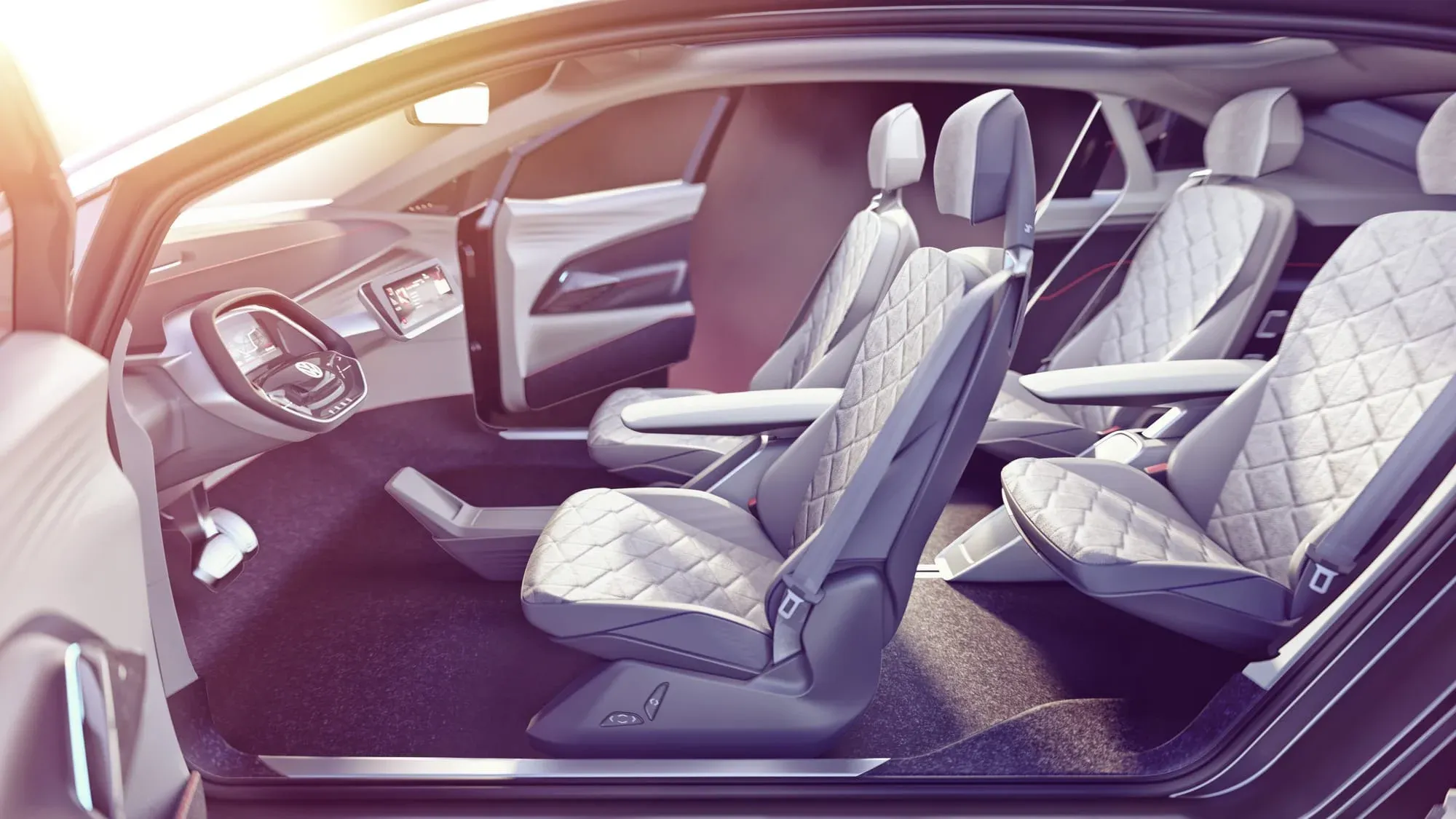
"Shanghai / Wolfsburg – Volkswagen is developing an entirely new range of avant-garde electric vehicles." — VW I.D. Crozz, press page
The team consisted of one developer, one tech artist, and me, the 3D artist. The challenge: make what had previously been implemented in Unreal Engine work just as well in Unity. Technically feasible, but a hellish ride in terms of time and planning. Additionally, the commissioning agency wanted to come by for a shoulder check — they weren't sure it would actually work.
What got finished in two weeks of round-the-clock crunch with an inhuman amount of overtime. No, that's not quite right — it actually only ended at the Shanghai Motor Show, after a brisk customer sign-off.
The application passed that sign-off — and the lesson stuck: for the experience on the show floor, the engine is secondary. Unreal or Unity — what matters is a team that understands the entire pipeline from asset to headset, and the willingness to take responsibility for the deadline.
This was my last stop at international car shows with Volkswagen. Of course, the journey of the official software product continued with the commissioned firms. My next contact with Volkswagen came at the end of 2018 for another marketing product — during the founding phase of my company, weltfern UG.
Looking back at the XR journey
Virtual Reality has evolved into an everyday technology for automakers like Volkswagen. Whether for direct approval of interior designs, virtual driving simulations, or car shows as a unique way to interactively experience a newly launched product.
What I took away from these productions comes down to three points:
- Immersion isn't created inside the headset, but in the production behind it. Heat, cable runs, fuses and the customer sign-off decide the experience — not the lab demo.
- If you ship technology in front of an audience, you need redundancy and ownership. A spare machine and someone who acts in an emergency instead of escalating.
- The tool is interchangeable. Unreal, Unity, whatever headset — what counts is a team that thinks the experience as a whole.
Exactly this experience — between design, engineering and the pressure of real deadlines — still shapes how I approach technology projects today: whether an XR product like relive XR, internal software or infrastructure. What held true on the show floors holds in every project: a solution only creates value when it reaches people and keeps its promises in operation. I think in goals, dependencies, usage and responsibility — and when needed, I'll still open up the enclosure myself.
Personally, this XR journey was an incredible win: so many production experiences, and the fascination of watching people around the world react to this technology — with skepticism, curiosity and enthusiasm.
Sources
- Developing with the VR headset — how Volkswagen works virtually — Volkswagen Newsroom
- I.D. Crozz II — premiere of the SUV concept at the IAA — Volkswagen Newsroom
- VW I.D. Crozz Press Kit — Volkswagen Press
An XR, product or technology project on the table, where experience from real productions helps? Worth a sparring session → ingmar@konnow.de · LinkedIn