
XR User Experience Progress in 2022
2022 was the year the metaverse was meant to take XR mainstream. A look back at the hardware, the interactions and the promises — with the hindsight of 2026.

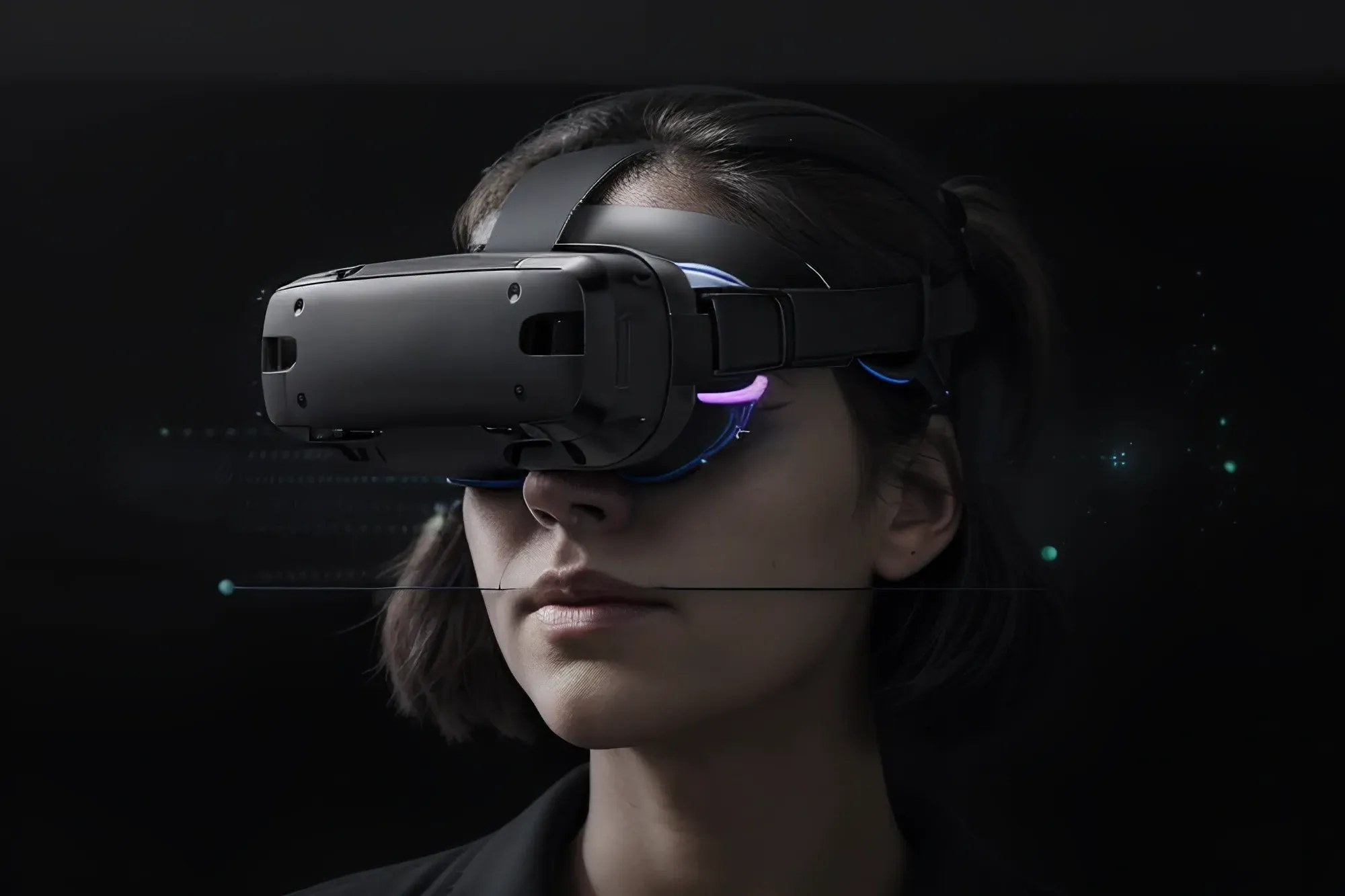
Back in 2015, when I registered my freelance business, I listed product design for virtual reality applications in the description. To the surprised question "Exciting — does such a thing exist?" I could confirm that my work focused precisely on this area. This article dates from 2022 — written in the middle of the metaverse hype — and was updated in 2026 with a look at what became of those promises.
Why was the "metaverse" a catalyst for innovation?
Mark Zuckerberg renamed Facebook, Inc. to Meta Platforms in late 2021 — a clear statement of direction. The potential lay in seamlessly connecting applications, and Meta was, alongside Google and Microsoft, one of the strongest innovation drivers for new software and hardware.
The bet only partially paid off: Meta has since poured tens of billions of US dollars into Reality Labs, while mass adoption never materialized — the term "metaverse" itself has largely disappeared from marketing vocabulary. What remains: the competition pushed the XR hardware market forward noticeably, and the underlying technology matured.
XR hardware sold better, availability increased massively
In 2021, the number of AR and VR devices shipped worldwide reached 9.86 million units, with forecasts pointing to 14.19 million units in 2022. — Statista
The explosion never came: the market consolidated instead, with Meta as the clear consumer leader — and new heavyweights like Apple (Vision Pro, 2024) and Samsung/Google (Galaxy XR on Android XR, 2025).
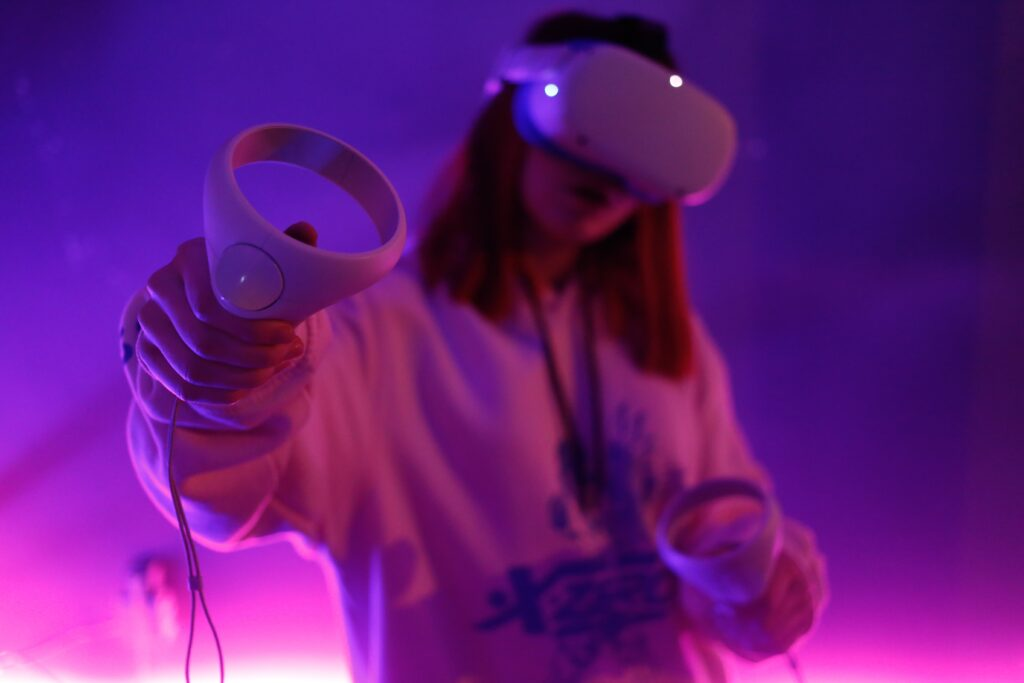
The best XR HMDs — 2022 list, 2026 perspective
- Meta Quest 2 — back then the best consumer choice (standalone or PC-streamed, strong AI hand tracking). Now superseded by Quest 3/3S and discontinued
- Meta Quest Pro — color passthrough, eye and face tracking. Discontinued in early 2025
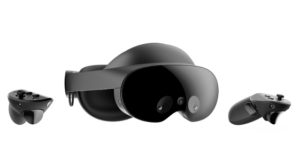
- VIVE Focus 3 — mostly VR arcades; very precise hand tracking with wrist trackers. HTC sold most of its consumer XR business to Google in 2025
- Varjo XR-3 — high-end PC-driven XR, ideal for automotive; since succeeded by the XR-4
- Magic Leap 2 — enterprise AR starting at $3,299; the company is now an optics/platform partner (including Android XR reference designs) rather than a device maker
- Nreal Light / Air — now called XREAL and more successful than ever with compact display glasses
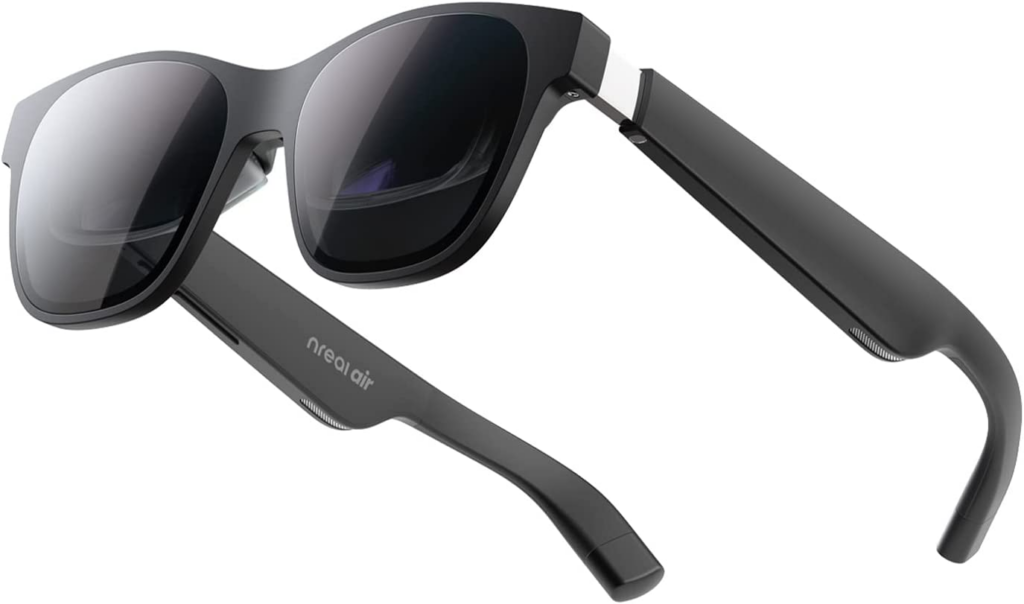
- New since then: Apple Vision Pro (2024, M5 refresh 2025) and Samsung Galaxy XR (2025) — both focused on spatial productivity
With new hardware came new software — the mixed reality options were the most noteworthy part.
XR-UX Design 2.0
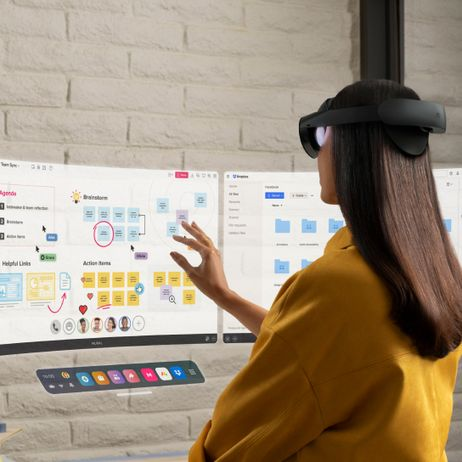
The era of complete isolation from reality ended in 2022: spatially inserting digital content into the real world finally enabled true use of both spaces — Meta simply called it "mixed reality." On top of that came controller-free interaction: hand tracking and native integration became available on more and more devices. The 2022 guess that the classic desk monitor might soon be history hasn't come true — but spatial computing workspaces are a real product category now, not a demo video.
XR interaction using AR techniques
For UX design, the overlaid reality works much like augmented reality: QR codes, image-based anchors and spatial tracking all carry over. Unlike the weaker virtualization on mobile devices, the full power of the connected PC was available for computation.
Mixed Reality for WebXR
Particularly impressive back then: WebXR in the headset browser — experiences via a link, no installation. The WebXR demo Spatial Fusion by Meta, PHORIA and LUSION showed passthrough, room-surface detection and anchored virtual objects directly in the browser.
XR interaction with real UI, GUI, VUI
Voice user interfaces and speech-to-text were in a completely different league in 2022 than in the Google Glass days. The Magic Leap 2, for example, combined wake-word intents, text-to-speech, gestures and a one-handed controller — plus eye tracking and a remarkable field of view for its time.
Sources
- Worldwide AR/VR headset shipments — Statista (2022)
- Magic Leap 2 hands-on — Tony "Skarredghost" Vitillo (2022)
- Spatial Fusion — WebXR demo — Meta, PHORIA & LUSION
- Artwork: Sean Couture — ArtStation
Update September 2026: Revised in hindsight — hardware status, links and framing brought up to date.
An XR or product challenge on the table where first-hand experience helps? Worth a conversation → ingmar@konnow.de · LinkedIn